10 Reasons to Upgrade Your Old Sprinkler System This Season
Most systems do not break. They quietly get worse, and the water bill is the only thing that notices.
September 10, 2026 · 4 min read
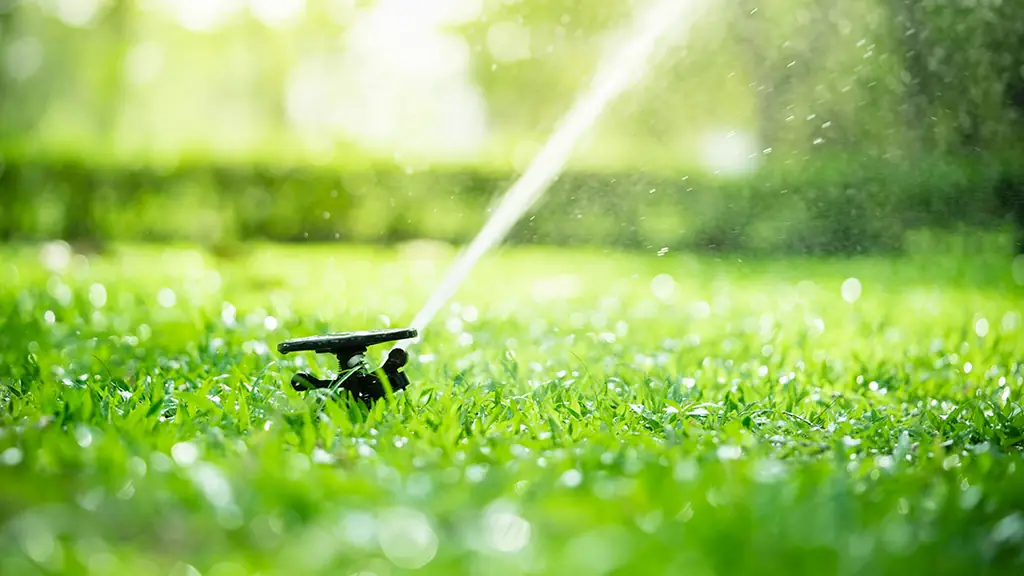
An irrigation system almost never fails on a single dramatic day. It degrades. A head sinks a quarter inch, a nozzle wears, a controller schedule stays where somebody set it in 2014, and the lawn slowly stops looking the way it used to. Because it happens over years, most homeowners assume the lawn is the problem and start treating the grass instead of the water.
Here are the ten reasons we most often end up recommending an upgrade rather than another repair on a Huntsville property.
1. The zones no longer match the yard
Yards change. A patio goes in, a tree matures and throws shade across what used to be full sun, a bed gets extended. The zone layout was correct for the yard that existed when it was designed, and nobody redrew it. Now one valve is watering deep shade and full sun on the same run time, and one of those two areas is always wrong.
2. You are watering the driveway
Overspray onto concrete is the easiest waste to spot and the easiest to ignore. If you can see a wet arc on the drive after a cycle, you are paying to water it. Older heads with worn nozzles get progressively less precise about where they stop.
3. The controller is not weather aware
A clock based controller runs the same schedule whether it rained yesterday or not. A weather aware controller adjusts to what the season is actually doing. In a North Alabama summer that difference shows up on the bill within a month.
4. Heads that will not pop up, or will not go back down
A head that will not retract is a head that will meet a mower. A head that will not rise is watering its own hole. Both are symptoms of wear, grit, or pressure that is no longer what the system was designed around.
5. Valve boxes have disappeared
This one is specific and it is common. Over years, sod grows over valve boxes until nobody can find them. Every future repair then starts with a search. We have opened systems where six valves were all buried under turf, and the first hour of the visit was archaeology rather than plumbing.
6. Pressure has changed and nothing was adjusted
Municipal pressure is not a constant across decades, and neither is your plumbing. A system throwing too hard mists instead of dropping, and the water leaves as vapour. A system throwing too weakly leaves dry rings between heads. Both look like a grass problem from the porch.
7. You are repairing the same zone repeatedly
One repair is maintenance. The third repair on the same run in two years is usually telling you the pipe or the wiring in that zone has reached the end of its useful life, and each visit is buying a shorter and shorter reprieve.
8. The bill went up and nothing else changed
A quiet underground leak does not surface. It does not flood the lawn or make a noise. It simply appears on the bill as a number that will not go back down. If your usage stepped up and stayed up, that is worth investigating before another season runs through it.
9. The lawn has patterns
Stripes, rings and consistently soggy corners are coverage maps drawn in grass. Turf shows you exactly where the water is and is not going, months before you would work it out any other way. Once you learn to read it, the lawn diagnoses itself.
10. You are about to spend money on top of it
This is the practical one. If you are laying sod, planting beds, putting in a patio or adding landscape lighting, that is the moment to bring the irrigation up to standard. The ground is already open, the coverage has to be right for new turf to establish, and retrofitting around finished hardscape costs more than doing it in sequence.
What an upgrade actually changes
An upgrade is not simply new parts. It is a redrawn zone plan for the yard as it exists now, heads specified per zone rather than one model used everywhere, valve boxes set where a person can reach them, and a controller programmed for the season rather than left on a schedule nobody remembers setting.
At B and C Irrigation Systems we have been doing this work in Huntsville since 1999, and every installation carries a one year warranty. Products carry a lifetime warranty when the system stays on our ongoing maintenance service, because parts genuinely do last when somebody inspects them on a schedule.
If several of the ten above sound like your yard, the estimate is free and done in person. Call the office on (256) 286-4108.
B & C Irrigation Systems, (256) 286-4108
Call (256) 286-4108More articles
3 Ways to Boost Your Garden's Health With the Right Sprinkler System
Most struggling beds are not underfed. They are watered on somebody else's schedule.
4 Questions to Ask Before Hiring an Irrigation Company
Most of an irrigation system is buried. These four questions tell you what you cannot see.