4 Sustainable Practices Used by Quality Sod Companies
A sustainable lawn is mostly decided in the week before the sod arrives.
September 10, 2026 · 4 min read
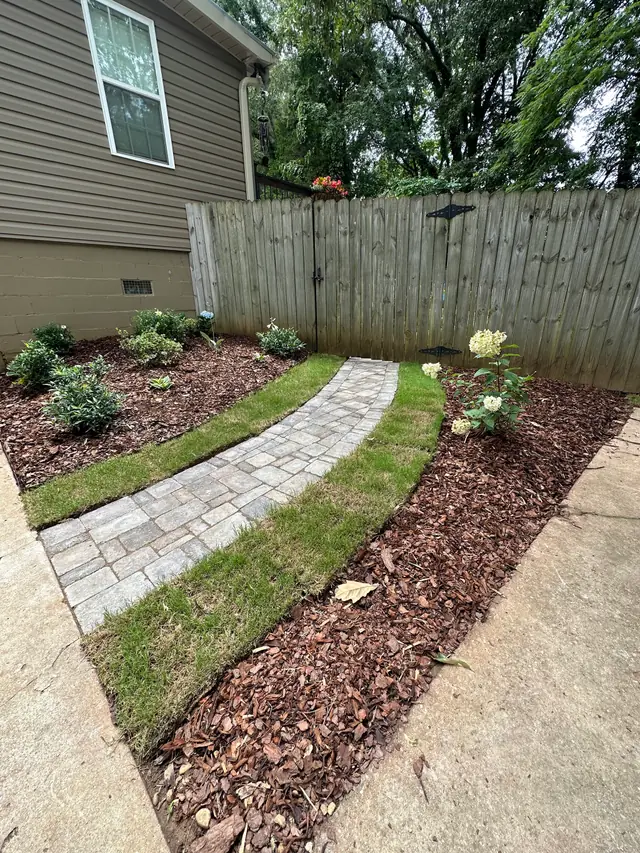
Sustainability in lawn work gets talked about as if it were a product you add at the end. In practice it is a set of unglamorous decisions made before the pallets are delivered, and they determine how much water the lawn will need for the rest of its life.
Here are four that make a measurable difference.
1. Prepare the soil rather than covering it
Sod laid onto compacted ground will root shallowly, because it cannot do anything else. A shallow rooted lawn dries out fast, needs frequent watering, and is the first thing to brown in an Alabama August. It will demand more water every year it exists.
Relieving compaction and getting the grade right before anything is laid is the least visible part of the job and the one that pays back longest. The grass is identical on day one either way. The difference shows up in year two.
2. Sort the drainage before the turf, not after
New sod on ground that holds water is a waste of new sod. Saturated soil has no air in it, roots cannot function, and the seams are where it shows first.
If a yard has a corner that stays wet for days, that is a drainage question and it is much cheaper to answer with the ground already open. Once the turf is down, fixing it means lifting what you just paid for. Catch basins, channel drains, downspout extensions and French drains all solve genuinely different versions of this problem, and picking the right one depends on where the water is arriving from.
3. Design the coverage for the lawn you are about to lay
New turf has a watering requirement that changes over about three weeks. It wants to be kept consistently damp while the roots knit into the soil underneath, and then weaned onto a normal schedule rather than dropped onto one.
That is difficult to do well if the irrigation has a weak zone, and new sod is exactly where a weak zone becomes visible, because the seams open there first. It is worth having coverage checked before the pallets arrive rather than discovering the gap once the lawn is down. This is the practical reason sod work and irrigation work belong with the same contractor.
4. Mow at the height the grass actually wants
For Bermuda we recommend maintaining a height of four inches. It is the single most useful number we give homeowners and the one most often ignored, usually because a shorter lawn looks tidier for about four days.
Cut Bermuda short and you force it to spend its energy regrowing leaf instead of putting roots down. Shallow roots dry out faster, so the lawn needs more water, and it thins wherever it is stressed. Thin turf lets sunlight to the soil, which is how weeds get their opening.
A taller cut shades its own root zone. The soil underneath stays cooler and holds moisture longer, which means the sprinkler system does less work for the same result. It is the closest thing to a free improvement available to a homeowner, and it costs nothing but raising the mower deck.
Water it in properly, then wean it off
The three weeks after delivery decide whether a lawn establishes or merely survives. New sod has effectively no root system, so it depends entirely on moisture in the top inch or two of soil, and it will dry out far faster than the established lawn it is replacing.
The mistake is not under watering at the start. It is never stopping. A lawn kept on establishment watering for a whole season never has a reason to root deeply, because water keeps arriving at the surface. Stepping the frequency down gradually once it has knitted is what pushes the roots down and produces a lawn that can handle a dry August without help.
Lifting a corner gently after a couple of weeks tells you where you are. If it resists, the roots have taken and you can begin easing off.
What these four have in common
None of them is a product. Every one is a decision about sequence or about restraint: prepare before covering, drain before laying, check coverage before delivery, cut higher than instinct suggests.
They also compound. A lawn on well prepared, well drained ground, with even coverage and a sensible mowing height, needs meaningfully less water than the same grass laid carelessly, and it stays looking better through the part of the summer when it matters.
B and C Irrigation Systems is recognised among the top sod companies in the Huntsville area, and we came to it from the irrigation side, which is why the watering conversation happens before the sod conversation. Estimates are free and in person. Call (256) 286-4108.
B & C Irrigation Systems, (256) 286-4108
Call (256) 286-4108More articles
10 Reasons to Upgrade Your Old Sprinkler System This Season
Most systems do not break. They quietly get worse, and the water bill is the only thing that notices.
3 Ways to Boost Your Garden's Health With the Right Sprinkler System
Most struggling beds are not underfed. They are watered on somebody else's schedule.